Why you should care about ethical social innovation and how it can be tackled
21 May, 2020

Esther Grossman & Catharina Drejer



Social startups must take vulnerable people into consideration when developing their solutions and products, argue Esther Hayes Grossman and Catharina Drejer, who have respectively explored the topics of migrant entrepreneurship and tech and human rights issues. Here’s how a handful of Nordic-based entrepreneurs have approached social innovation ethically.
Social innovation: the good, the bad and the ugly
These days, buzzwords like purpose driven and social innovation can’t be ignored. For better or worse, the phrases offer a golden ticket to international publicity and bigger financing for plucky new startups, aging NGOs, or progressive governments.
But with the solutions that come out of the merging of tech, business and social good, how are vulnerable people being considered in the process of said drive and innovation? Too often startups are looking for problems to solve with their innovative solutions rather than developing solutions to solve a problem at hand.
What do we mean by this? In August 2018, there were more than 50 apps available in the App Store and the Google Play Store aimed at addressing human trafficking in some form. Human trafficking is a serious human rights violation estimated to affect more than 40 million people worldwide, and just one example of a social issue getting attention from startups and the tech industry.
Too often startups are looking for problems to solve rather than developing solutions to solve a problem at hand.
Some of these companies seemed ignorant to the fact that their product was potentially endangering the vulnerable people they were trying to help. Moreover, these apps were not solving a concrete problem or considering the long-term consequences of their development.
Why is it that startups and developers readily skip the ethics in developing solutions when the ethics are at the core of the issue? Rather than thinking that considering ethics will slow you down in the fast-paced world of modern innovation, consider this: down the line, the cost of ignoring ethics at an early stage can become high for the people involved.
Renowned professor in technology Melvin Kranzberg addressed this dilemma in the pre-app 1980s. He wrote: “Many of our technology-related problems arise because of the unforeseen consequences when apparently benign technologies are employed on a massive scale. Hence many technical applications that seemed a boon to mankind when first introduced became threats when their use became widespread.”
This brings us to the topic at hand. Social innovators must consider the long-term consequences of their solutions. And they should begin to address these potential ethical consequences long before harm is done.
With the aim of gathering helpful insight for entrepreneurs in the Nordics and beyond, we spoke to a few social innovators in the region to understand how they address ethics in their business while working on challenges facing vulnerable people.
[Read also: "Startups should focus on a mission that’s bigger than profit": Meet the founder of Agrikaab]
Avoiding miscommunication
Mustafa Abdulameer, head of business programs at Helsinki-based social enterprise Startup Refugees, which helps refugees find jobs and start businesses, explains the first rule of thumb in the organization's work: members must understand exactly what they’re signing up for.
“We always make sure that asylum seekers and refugees understand everything in their mother tongue,” he says, adding that “all information and contracts are signed in the language that they know best in order to avoid any miscommunication.”
Big data gatherers are learning the importance of a knowledgeable user base, and social innovation should be held to the same standard.
As startups diversify, English tends to be the common language. But while a company may run more smoothly this way, with investors coming from outside markets for instance, it’s still important for startups to accurately communicate risk factors in the language that’s most familiar to the user.
For companies working with new communities in receiving countries, such as one that offers business mentoring in Denmark in the Arabic language, this tends to be a baseline objective. But for scaling social enterprises, avoiding miscommunication can be thrown by the wayside due to the high cost of manpower. However, this is not a cost that can be cut.
Getting people from the target community on board
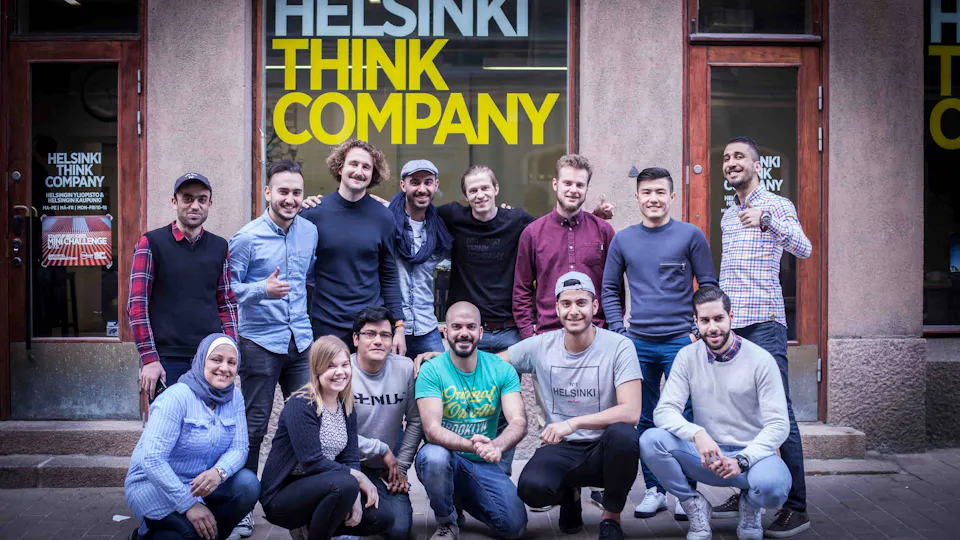
Another way in which to address ethics in social innovation is for founders to recruit from their target community, according to the founders of Startup Refugees, Norway-based VipiCash and Sweden-based Agrikaab.
“Everything goes through our community coordinators so that there is no misuse culturally, linguistically, or systematically,” Mustafa says of Startup Refugees. “Our community coordinators have already been through these experiences so they know the culture, language and mistakes that have been made.”
Social innovators must consider the long-term consequences of their solutions.
Getting people who have a good understanding of everything from the religious practices to the language of the country you’re operating in on board at your startup will not only benefit those you aim to help, but also speed up the process of getting things done.
Mohamed Jimale of the Stockholm-founded agritech company Agrikaab says that his connection to the community in Somalia (where Agrikaab operates farms and greenhouses) allows him to effectively navigate what many would consider “heightened risk.”
He explains that while he could have decided to operate his company in countries safer than Somalia, it isn’t what he wanted. “This is my community and I know how to manage what will happen,” he says. “I know that if we succeed in Somalia then the rest of Africa will be a piece of cake.”
The importance of private-public partnerships
Mohamed’s points bring us to an important crossroad. If we are to operate on the assumption that taking a risk, whether prudent or reckless, is a precursor to innovation, then what constitutes too much risk in a social enterprise? As well, who is responsible for bearing the burden of that risk?
We posed this question to Innovation Norway’s Humanitarian Innovation Program, an arm of the Norwegian government that’s frequently faced with the opportunity to fund risky innovation in the hope that it will solve some of the world’s toughest problems. Their answer? That private-public partnerships lie at the heart of safeguarding vulnerable populations from irresponsible innovation.
Ingvild von Krogh Strand, a senior advisor to the program, explains that their approach places the responsibility of protection into the hands of NGOs and UN entities. With this view, startups act as contributors rather than owners. This perspective also addresses a critical failure in most social innovation strategies: approaching a challenge with a solution that’s already established.
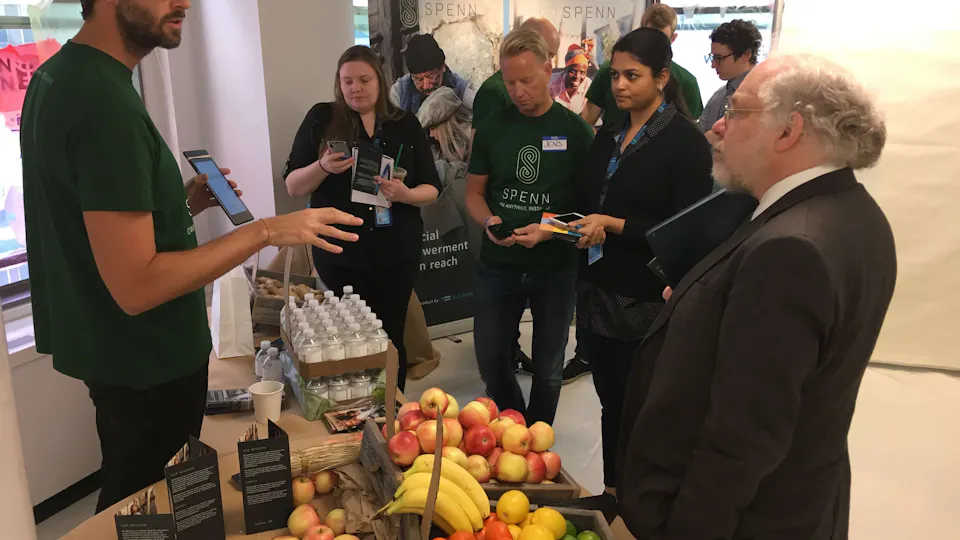
“This is the reason why we’ve structured our program the way that we have,” Ingvild explains. “We want the organizations to come with a problem [first], do a market dialogue, then do a procurement so that they hold the ownership to that problem.” This ensures that the solution is aware, if not fully immersed in the nuances of a social challenge, she says.
Accurately determining all the complexities surrounding how and what purpose driven startups or social innovation projects are and can be is nearly impossible. Moreover, these challenges span the globe and are not just regional.
But with the right tools and by taking the founders mentioned in this piece as examples of how to approach social innovation ethically, sustainable solutions to the challenges facing our world can be found. Let’s make sure, however, that these solutions don’t come at too high a cost.
Main photo by Nabeeh Samaan
[See also: Now is the time to build an impact startup in the Nordics. Here’s why]